
South Africa is currently facing one of its most serious foot-and-mouth disease (FMD) crises in recent years, a situation that has already disrupted exports and raised concerns across the agricultural sector. According to Daneel Rossouw, Head of Sales for Agriculture at Nedbank, the crisis highlights an urgent need to strengthen biosecurity if the country is to unlock its full potential in global livestock markets.
Livestock production remains the backbone of South Africa’s agricultural economy, contributing more than half of the sector’s total value. It supports thousands of farmers—both commercial and emerging—and sustains millions of jobs across the value chain. While local demand for meat remains steady, slow economic growth has limited income expansion, making export markets increasingly important for future growth.
However, recurring disease outbreaks continue to undermine this opportunity. FMD, in particular, has triggered trade bans from key markets, including China and Zambia, cutting off access to valuable export channels almost overnight. Beyond immediate financial losses, such disruptions damage long-term trade relationships, as international buyers shift to suppliers that can guarantee consistent, disease-free production.
The impact extends well beyond exports. Farmers are facing rising costs linked to vaccination, containment measures, and disrupted supply chains. Reduced production, combined with mounting veterinary and labour expenses, is placing significant pressure on already strained operations. Rural communities that depend on livestock farming are also feeling the effects, as income losses ripple through local economies.
The dairy sector has been particularly affected. With FMD cases reported across all provinces, movement restrictions have disrupted the flow of cattle and milk. Infected animals can see milk production drop by as much as 15% to 50%, leading to reduced output and financial strain. Export losses alone are estimated to exceed R1 billion, while ongoing disruptions contribute to price volatility and raise concerns about long-term food security.
At the core of the crisis are systemic weaknesses in animal health management. Gaps in surveillance, traceability, and movement control have made it difficult to contain outbreaks effectively. Informal livestock movement and inconsistent compliance with biosecurity measures further complicate efforts, undermining both disease control and confidence in South Africa’s export systems.
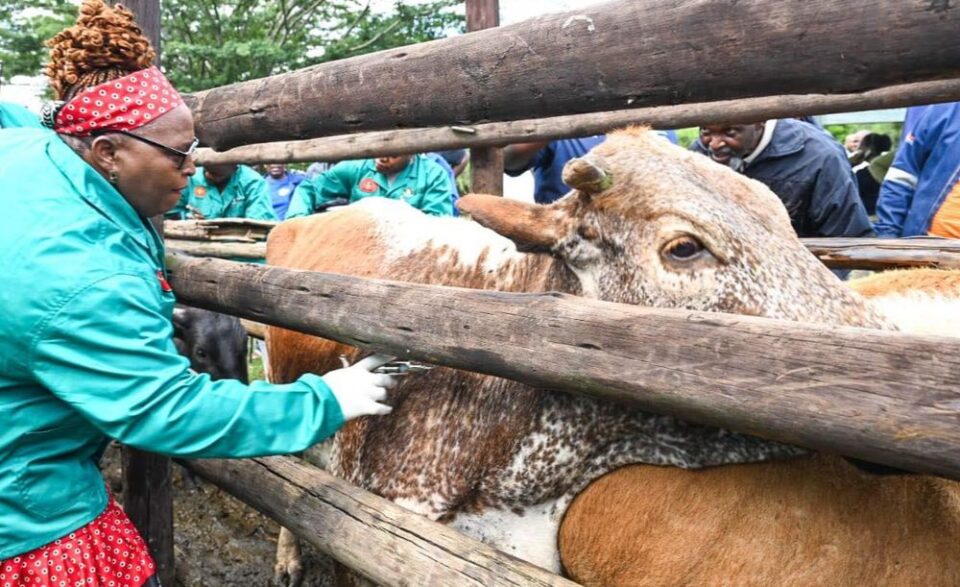
Despite these challenges, there are encouraging signs of progress. The government has shifted toward an “FMD-free with vaccination” strategy, supported by a nationwide vaccination campaign aimed at protecting the majority of the cattle herd. Collaboration between the Department of Agriculture and industry stakeholders has also improved response times in affected areas.
Research efforts led by Red Meat Industry Services (RMIS), together with academic partners, are helping to better understand the strains of FMD circulating in the country. This work is expected to inform more effective risk management and support the development of updated regulations that could facilitate safer trade.
Another significant development is the introduction of a locally produced FMD vaccine by the Agricultural Research Council, marking a step toward rebuilding domestic vaccine capacity. This advancement could reduce reliance on imports and strengthen the country’s ability to respond quickly to future outbreaks.
Looking ahead, traceability systems are emerging as a critical tool in transforming the crisis into an opportunity. By improving the ability to track livestock movements, these systems can enhance disease surveillance, support faster containment, and help restore confidence in South African exports. They also offer additional benefits, including improved efficiency, better product quality, and stronger market positioning.
Industry efforts to roll out a national traceability platform—linking farms, auctions, feedlots, and abattoirs—signal growing alignment between government and private stakeholders. There is also increasing recognition of the need for inclusive governance models that give producers, including emerging farmers, a stronger voice in shaping these systems.
The stakes for South Africa’s livestock sector are high. With ongoing outbreaks, export restrictions, and mounting financial pressure, decisive action is essential. Strengthened biosecurity, effective traceability, and a resilient vaccine infrastructure offer a clear path forward.
If these efforts are sustained, South Africa has an opportunity not only to recover but to rebuild a stronger, more competitive livestock industry—one capable of securing both domestic stability and a trusted position in global markets.
