
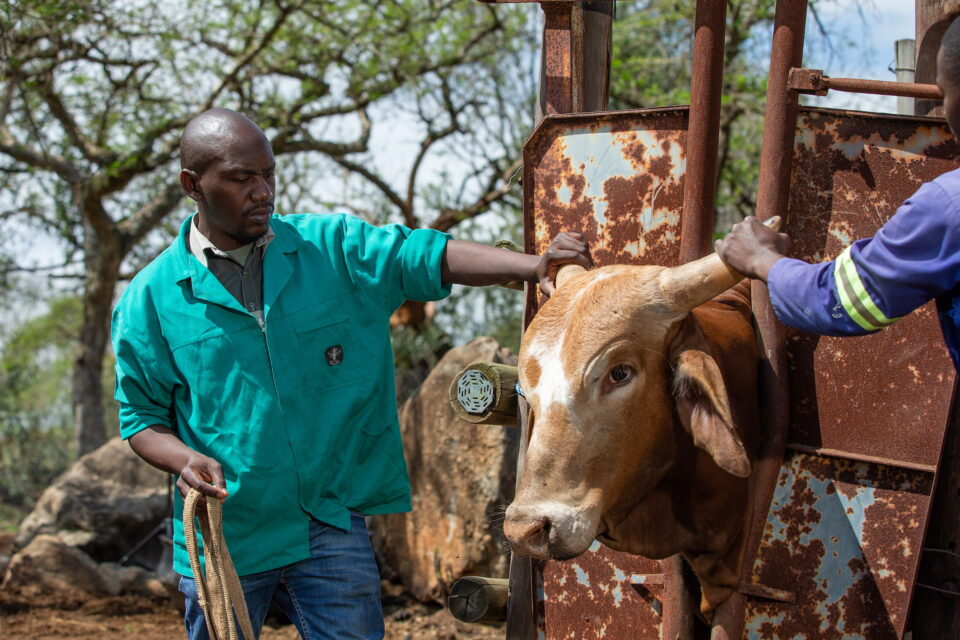
As the world marked World Veterinary Day on 25 April, global animal health leader Zoetis highlighted the often-overlooked role veterinarians play in driving South Africa’s agricultural economy—particularly within the poultry and livestock sectors.
While veterinarians are commonly associated with treating pets, their influence extends far beyond the clinic. Across Africa’s livestock and poultry industries, they are central to safeguarding food security, protecting export markets, and ensuring public health through proactive disease prevention and herd management.
Prevention: the backbone of productive farming
In modern livestock and poultry production, prevention is far more than a best practice—it is an economic necessity. Disease outbreaks can devastate herds and flocks, disrupt supply chains, and lead to significant financial losses.
“Preventing disease is always more effective and cost-efficient than managing outbreaks,” explains Dr Tarryn Dent of Zoetis South Africa. “Strong preventive care systems build resilience across the entire agricultural value chain—from farm to consumer.”
For livestock producers, this principle is critical. According to Dr Ralf J. Patzelt, Business Unit Director: Livestock at Zoetis South Africa, every investment in prevention translates into measurable economic returns.
“Every rand spent on prevention saves multiples in treatment costs, mortalities, movement restrictions, and lost trade opportunities.”
South Africa’s ongoing efforts to strengthen vaccination strategies against major diseases such as foot-and-mouth disease reflect a growing commitment to long-term agricultural sustainability.
Driving efficiency in poultry and livestock production
Healthy animals are the foundation of efficient and profitable farming systems. In both poultry and livestock operations, disease-free production leads to improved feed conversion, faster growth rates, and reduced mortality.
For poultry producers in particular, veterinary oversight is essential in maintaining flock health, managing biosecurity, and ensuring consistent production cycles. These efficiencies directly influence the affordability and availability of protein for consumers.
Stable production also helps shield households—especially in lower-income segments—from food price volatility, reinforcing the critical link between animal health and food security.
Protecting Africa’s export competitiveness
Veterinarians play a crucial role in maintaining access to international markets. Compliance with strict sanitary and phytosanitary standards is essential for exporting meat, poultry, and animal products.
Through vaccination programmes, disease surveillance, and certification processes, veterinarians ensure that producers meet global requirements. Without this oversight, disease outbreaks could result in immediate trade restrictions, threatening billions in export revenue.
Patzelt emphasises the need for coordinated action:
“Sustaining export markets requires strong collaboration between state veterinarians, private practitioners, and industry stakeholders. Continuous vigilance is essential to maintaining South Africa’s reputation as a reliable supplier.”
Supporting small-scale and emerging farmers
Beyond large commercial operations, veterinarians are instrumental in empowering small-scale and emerging farmers—key players in Africa’s rural economy.
Simple, practical interventions such as vaccination schedules, parasite control, and basic biosecurity can significantly improve productivity and profitability. Access to veterinary guidance enables farmers to reduce losses, increase yields, and participate more effectively in formal markets.
Companies like Zoetis also support these efforts through training programmes, farmer education initiatives, and accessible animal health solutions.
Managing ongoing disease threats
South Africa’s livestock and poultry industries continue to face persistent disease challenges, including:
- Foot-and-mouth disease (FMD)
- African swine fever in pigs
- Avian influenza risks in poultry
- Tick-borne diseases and internal parasites
These threats highlight the importance of preparedness, rapid response systems, and continuous monitoring. Veterinarians are at the forefront of these efforts, implementing biosecurity protocols, improving traceability, and guiding farmers through outbreak management.
Equally important is effective communication. Clear, timely information sharing between veterinarians and farmers has proven critical in limiting the spread and impact of diseases.
Public health and the One Health approach
The role of veterinarians extends into public health through the prevention of zoonotic diseases—those that can be transmitted between animals and humans.
Diseases such as rabies remain a concern in many regions, reinforcing the need for vaccination and responsible animal management. More broadly, veterinarians contribute to the global One Health approach, which recognises the interconnectedness of animal, human, and environmental health.
By ensuring safe food production, controlling disease risks, and promoting responsible farming practices, veterinarians play a vital role in protecting communities across Africa.
Building resilience through collaboration
Agricultural resilience is built through collective effort. Veterinarians provide scientific expertise and disease surveillance, farmers implement biosecurity and early reporting, and governments support policy, infrastructure, and laboratory capacity.
Public–private partnerships, shared data systems, and coordinated vaccination programmes are strengthening the sector’s ability to respond to emerging threats and maintain stable production.
A vital but often unseen economic force
Veterinarians may not always be recognised as economic drivers, but their impact across the poultry and livestock value chain is undeniable. From improving productivity and ensuring food safety to protecting exports and supporting rural livelihoods, their contribution is foundational to Africa’s agricultural growth.
As Dr Dent concludes:
“Veterinary care goes far beyond the clinic. It underpins food security, public health, and the sustainability of our farming systems. Prevention is where we can make the greatest impact—and it’s a shared responsibility across the entire value chain.”
