
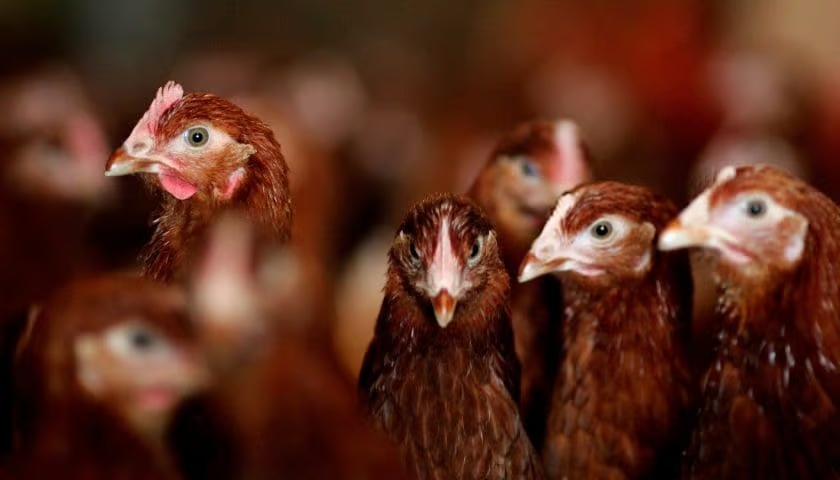
As demand for affordable protein continues rising across Nigeria, Ekiti State is positioning itself as one of the country’s emerging poultry production centres through an ambitious expansion drive aimed at transforming the sector into a major economic growth engine.
State authorities are intensifying investments in poultry farming as part of broader efforts to strengthen food security, create jobs, attract agribusiness investment, and reduce dependence on imported poultry products. The strategy reflects a growing shift across Africa, where poultry farming is increasingly viewed as one of the continent’s fastest-growing and most commercially viable agricultural sectors.
Poultry Industry Positioned as Economic Growth Driver
For many years, several Nigerian states relied heavily on imports and federal support to meet local food demand. However, rising food prices, increasing population growth, and pressure on domestic supply chains are forcing regional governments to rethink agricultural development strategies.
In Ekiti State, poultry farming is now being promoted not only as a subsistence activity but as a fully commercial industry capable of generating long-term economic opportunities.
Chicken meat and eggs remain among Nigeria’s most consumed protein products due to their affordability for low- and middle-income households. Rapid urbanisation, changing consumer habits, and growing demand from restaurants, hotels, schools, and fast-food outlets continue driving poultry consumption nationwide.
Recognising this opportunity, Ekiti State is focusing on building an integrated poultry value chain that supports production, processing, storage, distribution, and marketing.
Youth Empowerment at the Centre of the Programme
One of the major priorities of the expansion programme is increasing youth participation in commercial poultry farming.
The state government has introduced initiatives aimed at helping young people enter the poultry sector through organised broiler production schemes, technical training, mentorship, and structured farming opportunities.
Officials believe agriculture can provide a practical solution to rising unemployment, particularly among graduates struggling to find formal employment opportunities.
Modern poultry farming methods and business-focused training programmes are also helping change perceptions about agriculture among younger generations, repositioning farming as a profitable and technology-driven business sector rather than a last-resort occupation.
Investment in Modern Poultry Infrastructure
As part of the expansion drive, plans are underway to establish large-scale poultry production centres capable of housing thousands of birds under modern management systems.
The new facilities are expected to improve:
- Production efficiency
- Disease control
- Hygiene standards
- Storage capacity
- Overall operational productivity
Industry experts say improved infrastructure is critical if Nigeria hopes to compete more effectively within regional poultry markets.
Many poultry farmers across Africa still face challenges linked to outdated facilities, limited cold-chain infrastructure, and inadequate processing systems, all of which reduce profitability and increase losses.
Focus on Processing and Value Addition
Ekiti State is also prioritising poultry processing and value addition to improve the competitiveness of locally produced poultry products.
Rather than relying solely on the sale of live birds, the state aims to strengthen processing capabilities including:
- Slaughtering
- Packaging
- Preservation
- Distribution
Improved processing systems are expected to help farmers access larger retail markets while extending product shelf life and reducing post-harvest losses.
Industry analysts note that processed poultry products often command higher market value and create stronger commercial opportunities for producers.
Strengthening Feed Supply and Food Security
Feed production remains one of the biggest cost challenges within the poultry sector, and fluctuations in feed prices continue affecting profitability for many farmers.
To address this, Ekiti State is working to strengthen local feed supply systems as part of its wider agricultural transformation strategy.
Officials believe increased local poultry production will also help improve food security by stabilising the availability and affordability of chicken and eggs in domestic markets.
Building a Model for Agricultural Industrialisation
Agricultural stakeholders say Ekiti State’s poultry expansion demonstrates how regional governments can drive agricultural industrialisation through focused policy direction and strategic investment.
Beyond farming itself, the programme is expected to stimulate growth across related industries including:
- Veterinary services
- Cold-chain logistics
- Packaging
- Transportation
- Agritech solutions
- Poultry equipment supply
Farmers and industry participants have welcomed the renewed investment momentum, expressing optimism that sustained support and private sector collaboration could position Ekiti among Nigeria’s leading poultry-producing regions in the coming years.
While challenges such as feed costs, disease outbreaks, and financing pressures remain across the industry, Ekiti State’s aggressive poultry expansion reflects growing confidence in agriculture’s role as a driver of economic growth, employment creation, and food security in Nigeria and across Africa.
