
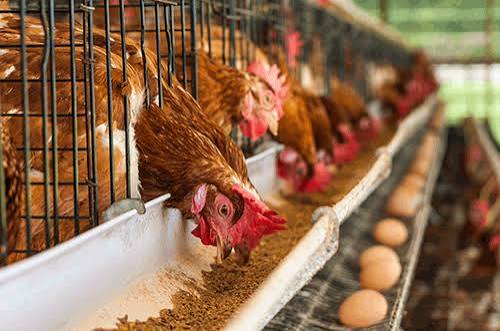
Ghana’s domestic poultry production has risen from 4% to 22%, but growing egg supplies are increasing pressure on the industry to expand processing capacity, improve market access and strengthen local feed production.
The rise has renewed attention on infrastructure designed to help poultry farmers turn higher production into sustainable business opportunities. At Bechem in the Ahafo Region, President John Dramani Mahama has inspected a poultry, meat and feed processing factory under construction, a project expected to support several stages of Ghana’s poultry value chain.
The inspection took place during the first day of the President’s two-day tour of the region, where he reviewed progress on the facility being developed under the government’s broader Feed Ghana Programme.
Food and Agriculture Minister Eric Opoku told the President that the government’s Nkoko Nkitinkiti initiative had contributed to the increase in domestic poultry production. However, the expansion has also resulted in a surplus of eggs, highlighting the need for stronger processing, distribution and marketing systems to absorb rising output.
For poultry producers, higher production does not automatically translate into better returns. When supplies increase faster than demand or available processing capacity, farmers can struggle to sell their products at profitable prices. Investment in processing and market infrastructure can help reduce these bottlenecks by creating additional outlets for poultry products.
The Bechem factory is intended to address some of these gaps by combining poultry and meat processing with feed production and a hatchery. Bringing these activities together could help improve access to essential production inputs, support local poultry breeding and create additional opportunities for farmers and businesses operating along the supply chain.
Feed availability and affordability remain central to poultry competitiveness across many African markets. Since feed represents a major share of production costs, local manufacturing capacity could help strengthen supply chains, although the benefits will depend on access to raw materials, efficient production and competitive pricing.
The inclusion of a hatchery is also significant because a dependable supply of day-old chicks is essential for farmers seeking to expand production. Reliable access to chicks, combined with appropriate veterinary services and quality feed, can help producers plan their operations more consistently.
President Mahama recalled launching construction of the facility on November 27, 2025. At the time of his inspection, construction was reported to be 58% complete. He said the project was expected to position Bechem as a major poultry centre once it becomes operational.
The President also encouraged young people to explore poultry farming, pointing to market opportunities for locally produced chicken. Greater participation by young farmers could support employment and enterprise development, particularly if producers can access finance, technical training, quality inputs and dependable buyers.
Local employment has already begun to emerge from the construction project, according to Bechem Nifahene Awuah Boadi, who welcomed the development and expressed hope that the factory would create further jobs for young people in the area.
Beyond employment at the facility itself, a functioning processing plant could generate business opportunities for poultry farmers, feed suppliers, chick producers, transport operators, distributors and retailers. The scale of these benefits will depend on the factory’s operating capacity and its ability to build reliable commercial relationships with producers.
Ghana’s increase in domestic poultry production presents an opportunity to strengthen local food supply, but sustaining that progress will require more than expanding the number of birds raised. The Bechem project’s impact will ultimately depend on whether processing, feed production, hatchery services and market access develop alongside farm output, enabling poultry farmers to sell consistently and earn sustainable returns.
