


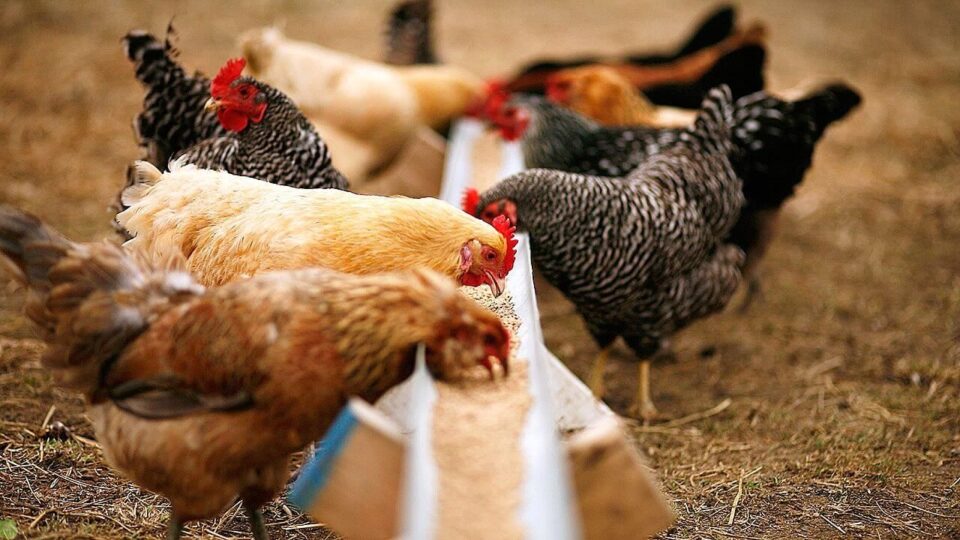
Rising feed prices in Egypt are putting increasing financial pressure on poultry meat and egg producers already struggling with declining profitability. Since early October 2026, compound feed prices have increased by approximately 15%, while rising by nearly a third over the past few months. The main factors include the depreciation of the Egyptian pound, higher costs of imported feed ingredients and disruptions to global supply chains. According to industry representatives, increasing production expenses have been accompanied by declining poultry selling prices, resulting in substantial financial losses.
According to Tharwat El-Zeiny, vice-president of Egypt’s Poultry Producers Union, the price of compound feed has increased by EGP 400–600 (€6.40–9.60) per ton in recent weeks. The main driver has been the weakening of the national currency, which lost approximately 7% of its value against the US dollar in October, falling to around EGP 56 per dollar. The depreciation followed escalating geopolitical tensions in the Middle East, particularly the conflict involving Iran, which triggered capital outflows and increased demand for foreign currency.
Currency fluctuations have a particularly strong impact on Egypt’s poultry industry due to the country’s heavy dependence on imported feed ingredients. Domestic soybean production covers less than 2% of demand, while more than half of the corn consumed in the country must be imported. As international contracts are predominantly denominated in US dollars, the depreciation of the Egyptian pound directly increases feed production costs. Additional pressure comes from logistical difficulties and supply disruptions caused by escalating regional tensions.
According to industry estimates, the cost of producing 1 kg of poultry meat currently stands at around EGP 75 (€1.20), but could rise to EGP 80 (€1.28) in the next production cycle. Meanwhile, the production cost of a tray of eggs could increase from EGP 105 to EGP 120 (€1.67–1.91). At the same time, poultry selling prices have declined in recent weeks despite rising production expenses. According to El-Zeiny, total losses in Egypt’s poultry sector are estimated at approximately EGP 90 mln (€1.44 mln) per day.
Further market developments will largely depend on the Egyptian pound’s exchange rate and the stability of international feed ingredient supplies. If the US dollar strengthens further, corn and soybean imports will become more expensive, adding pressure to poultry production costs. Meanwhile, limited opportunities to raise selling prices for poultry meat and eggs could lead to a further deterioration in producers’ profitability. Under these conditions, persistently high feed prices are expected to remain one of the main risks facing Egypt’s poultry industry in the coming months.
