
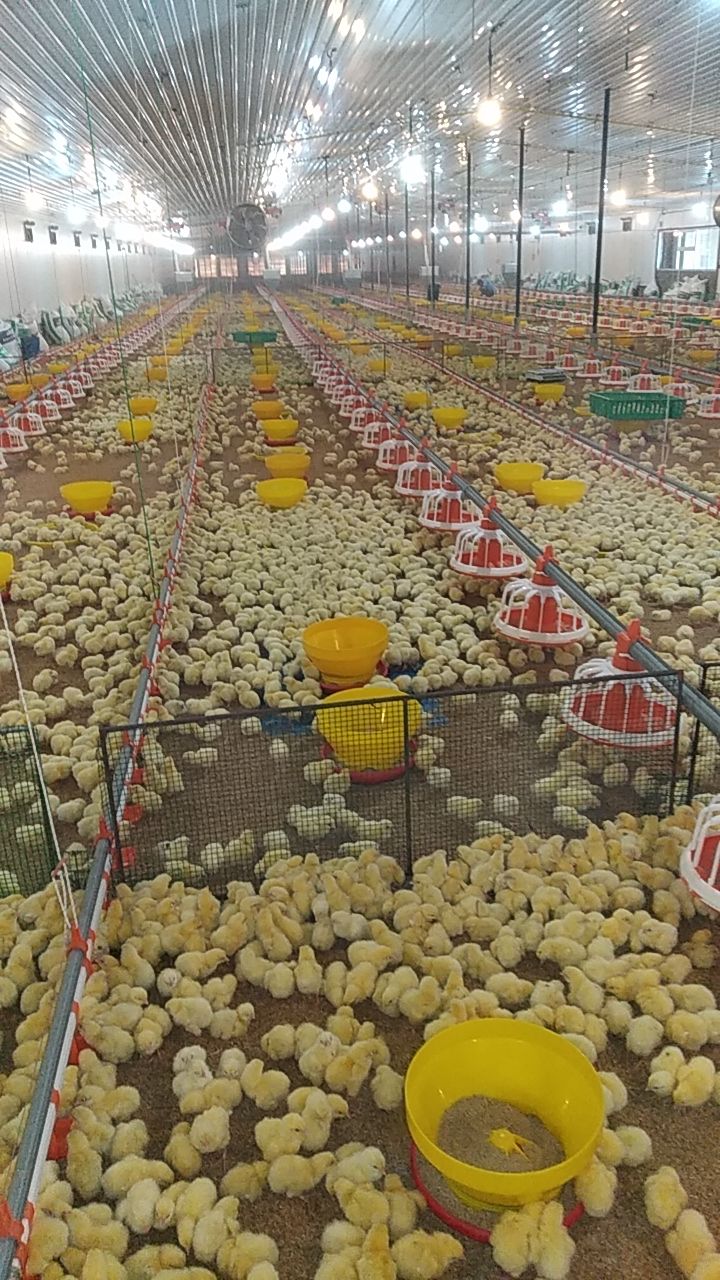
A newly signed contract between Israeli livestock turnkey specialist Agrotop and Ethiopian poultry and feed company Nutropia will develop one of the largest vertically integrated poultry operations in Africa and the Middle East, producing an estimated 24,000 tonnes of chicken meat annually once fully operational. The project is designed to supply affordable protein to Ethiopia’s domestic market while also targeting export opportunities across East Africa and the Middle East.
Nutropia, a poultry and feed company currently under establishment in Ethiopia, has set an explicit long-term goal: becoming one of the top ten poultry and feed companies across Africa and the Middle East within a decade. The scale of the ambition reflects a broader recognition that Ethiopia’s poultry sector — like much of the wider East African region — has significant room to grow into rising domestic demand for affordable animal protein.
A Project Built Around Nutrition, Not Just Volume
What distinguishes this project from a straightforward commercial expansion is its explicit framing around public health outcomes. Nutropia has stated its goal is specifically to address malnutrition, under-nutrition, and low protein intake in Ethiopia through reliable, affordable chicken meat production — treating the poultry operation as much a nutrition intervention as a commercial venture. Given that poultry is widely considered one of the most accessible and affordable sources of animal protein across African markets, a vertically integrated operation of this scale has the potential to meaningfully shift local protein availability if it reaches its production targets.
The project is structured as vertically integrated, meaning Nutropia and Agrotop are building capacity across breeding, feed production, and broiler operations within a single coordinated system — an approach designed to give the company direct control over feed quality, biosecurity, and production consistency, rather than depending on fragmented external suppliers at each stage.
Ethiopia’s Place in Africa’s Poultry Growth Story
The Nutropia project lands within a broader continental poultry expansion. According to Netherlands-based agricultural bank Rabobank, Africa’s poultry industry is projected to grow at a compound annual rate of approximately 4.7 percent from its current valuation of roughly $25 billion, with markets including South Africa, Nigeria, Algeria, Ethiopia, and Morocco identified as leading that growth. Industry analysts at biotechnology firm Alltech Africa have gone as far as describing Africa’s long-term poultry potential in the same breath as Brazil — currently the world’s largest chicken meat exporter — suggesting the continent’s poultry sector, while still constrained by underfunding, disease pressure, and regulatory gaps, has genuine capacity to become a major global protein producer over time.
Ethiopia specifically is forecast to be among the fastest-growing markets in Africa’s poultry feed sector, with a projected compound annual growth rate of 7.64 percent through 2031 — among the highest of any African market tracked by industry analysts, reflecting both the country’s large population base and the relatively early stage of its commercial poultry sector’s development.
The Regional Context: Nigeria’s Poultry Buildout
Ethiopia isn’t alone in scaling up poultry production this year. Nigeria’s own poultry sector has seen a wave of new industrial investment announcements in 2026, with the country’s chicken population estimated at nearly 809.8 million birds as of 2024 — the largest in Africa. Industry analysts tracking Nigeria’s National Livestock Modernization Plan describe the sector as entering a more structured phase of development, though they caution that the real test lies in execution and long-term viability, and in successfully integrating the country’s many small-scale poultry producers into an increasingly industrialized value chain rather than leaving them behind.
For Ethiopian consumers, particularly in urban centers where demand for affordable protein continues to climb, the success of the Nutropia-Agrotop project will hinge on whether its ambitious production targets translate into consistently available, competitively priced chicken meat at the retail level — the outcome that would ultimately determine whether this qualifies as both a commercial success and the nutrition intervention its founders have framed it to be.
