
Senegalese poultry giant Sedima is investing US$35 million in an integrated poultry and grain complex in the Republic of Congo, marking a major expansion of its African operations and a push to reduce dependence on imported chicken and animal feed through locally controlled production.
The project, valued at 20.47 billion CFA francs, will be developed at Nkouo in the Pool department through Sedima Congo SA, the company’s local subsidiary. It is designed to connect crop farming, feed production, hatchery operations, poultry rearing and chicken processing under one integrated system.
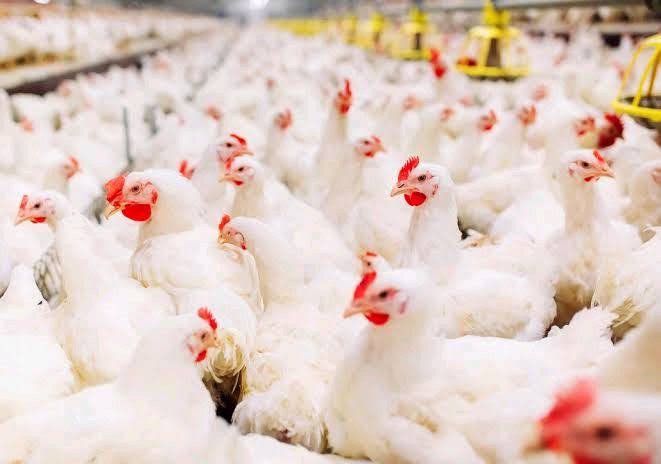
Once fully operational, the complex is expected to produce 10,800 tonnes of maize, 6,600 tonnes of soybeans and 2,200 tonnes of broiler chicken annually. The planned facilities include crop farms, a hatchery, poultry houses and a slaughterhouse, allowing the company to manage several stages of the production chain.
The investment will be financed through a combination of equity and loans from regional financial institutions, including BGFIBank and the Development Bank of Central African States (BDEAC).
Sedima’s expansion comes as the Republic of Congo and other Central African markets continue to rely heavily on imported poultry products and feed ingredients. Establishing local grain production alongside poultry operations could help reduce exposure to imported inputs, improve supply coordination and strengthen domestic production capacity.
The integrated model is based on the company’s experience in Senegal, where it has developed operations spanning poultry genetics, feed manufacturing, farming and processing. By extending this approach into Congo, Sedima is seeking to establish a locally rooted supply chain that connects agricultural production with the growing demand for chicken.
The investment has been more than a decade in development. In February 2015, Sedima executives met poultry farmers in Pointe-Noire to discuss opportunities for producing and distributing day-old chicks in the Congolese market. The company subsequently pursued partnerships and engagement with local authorities as it worked towards establishing its operations.
Sedima’s expansion reflects the growing role of established African agribusinesses in developing production capacity beyond their home markets. Rather than relying exclusively on imports or isolated farming operations, integrated investments can link grain cultivation, feed manufacturing and poultry processing, creating commercial opportunities across several parts of the agricultural value chain.
The company was founded in 1976 by Babacar Ngom, who began with just 120 broiler chicks and a budget of 60,000 CFA francs. Over the following decades, the business grew into one of Senegal’s major poultry groups, supplying day-old chicks, animal feed and eggs while expanding into grain farming, milling and other sectors.
Sedima’s operations have largely remained concentrated in Senegal, although it has also developed a presence in Mali and Congo. The new complex represents its largest foreign investment to date and signals an effort to transfer its integrated production model into another African market.
The group is now led by Anta Babacar Ngom Diack, who joined the business in 2009 and took over its management in 2016. Her leadership comes as the company pursues opportunities to extend its agricultural and poultry activities across the region.
For Congo’s poultry industry, the proposed complex could contribute to domestic production, create demand for locally grown maize and soybeans, and support activity in hatchery operations, farming, processing and distribution. Its eventual impact will depend on implementation, production performance, input availability and the ability to compete with imported products.
Sedima’s planned investment highlights the potential of African agribusinesses to build cross-border poultry supply chains that connect crop production with feed and meat markets. For the wider African poultry sector, the project illustrates how integrated investment could support local sourcing, expand processing capacity and strengthen regional food production, provided that businesses can deliver competitive prices and reliable supplies.
