
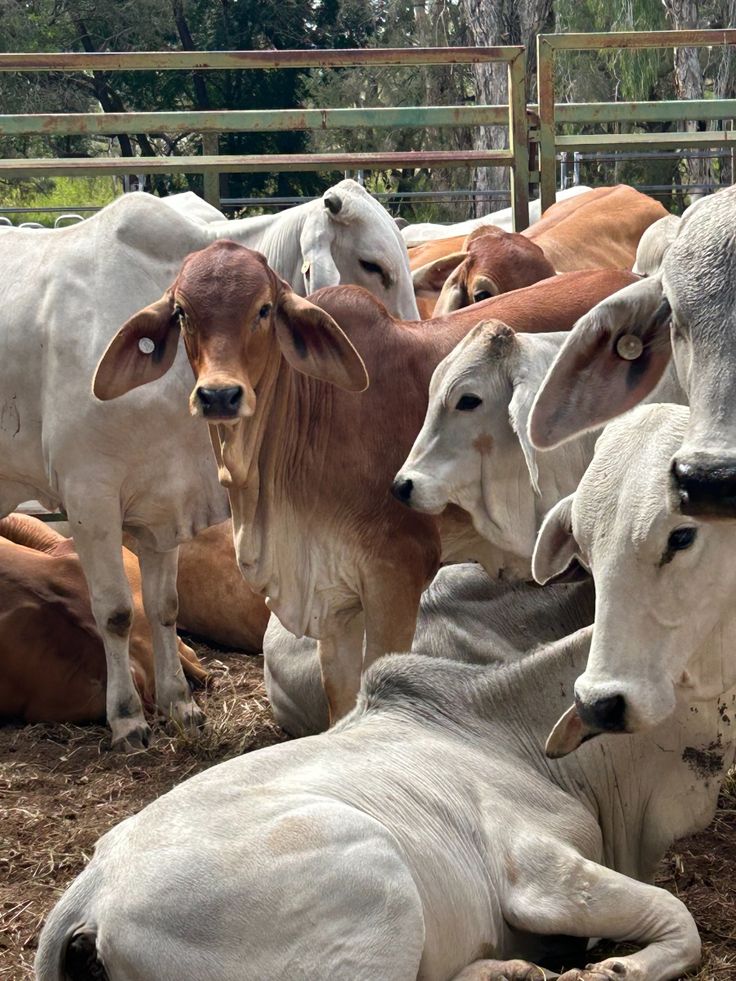
Botswana has received its first shipment of 200 pregnant Girolando dairy cows from Brazil, marking the opening phase of a programme led by the Botswana Development Corporation to import 1,000 cattle with high genetic potential.
The shipment is part of a broader expansion of Brazilian cattle genetics and reproductive technologies across African livestock markets, as governments and producers look to improve herd productivity and build more commercially viable dairy industries.
Girolando cattle are particularly suited to this strategy. Developed in Brazil through the crossing of Holstein and Gir cattle, the breed combines the milk-producing potential of Holsteins with the heat tolerance and adaptability of Gir cattle, making it well suited to tropical and subtropical production environments.
For Botswana, the objective is to develop commercial-scale milk production using genetics better adapted to local climatic conditions, rather than relying exclusively on temperate dairy breeds that can struggle under heat and other environmental stresses.
However, improved genetics alone will not transform the country’s dairy sector. The productivity gains associated with high-performing animals depend heavily on adequate nutrition, reliable veterinary services, reproductive management, housing, water availability, and the wider infrastructure required to support commercial dairy production.
Why West Africa Is Watching
The importance of livestock productivity is particularly clear in West Africa, where dairy imports continue to represent a significant economic burden.
The region imported 457,157 tonnes of dairy products in 2024, at a cost of nearly $869 million, according to Food and Agriculture Organization data. The scale of those imports has strengthened the case for expanding domestic dairy production and improving the productivity of local herds.
While much of the recent investment in advanced livestock genetics has initially been concentrated in Southern and East African markets, developments such as Botswana’s Girolando programme could provide a model for other African countries seeking to reduce dependence on imported dairy products.
A Broader Investment Wave
Botswana’s cattle programme is emerging as part of a wider flow of capital, technology and expertise into African livestock and poultry production.
Africa’s combined dairy and egg market is projected to grow by roughly 10% annually between 2024 and 2029, according to Statista forecasts. Poultry consumption is also rising as populations expand and diets diversify toward greater consumption of animal protein.
That growth is attracting international genetics companies, feed manufacturers, animal-health specialists and equipment suppliers. Many are entering African markets through partnerships with local producers, combining international technology and genetics with knowledge of local production conditions.
Processing and cold-chain infrastructure are also receiving greater attention. These systems are critical because increased farm-level production does not automatically translate into a reliable supply of milk and other animal products. Without adequate collection, refrigeration, processing and distribution capacity, higher production can still be undermined by post-production losses and supply bottlenecks.
The growing commercial interest in the sector will also be visible at VIV Africa 2026 in Kigali, Rwanda, which is expected to attract about 2,000 visitors from across Africa, including Kenya, Nigeria, Tanzania, Ethiopia, South Africa and Cameroon.
The Productivity Case for Better Genetics
The underlying case for genetic improvement can already be seen in other African dairy markets.
In Kenya, researchers at the Kenya Agriculture and Livestock Research Organization have been working to increase average dairy yields from roughly two gallons per cow per day, with leading regional herds approaching three gallons, toward a longer-term target of about eight gallons.
Achieving such gains requires more than improved genetics. Better-performing animals also have greater nutritional and management requirements. Without adequate feed, animal-health services and farm management, their genetic potential cannot be fully expressed.
That principle is central to Botswana’s Girolando programme.
The imported cattle could provide the genetic foundation for a more productive national dairy herd, but the long-term success of the programme will depend on whether Botswana can build the supporting production system around them.
From Genetics to a Scalable Dairy Industry
The remaining 800 cattle expected under the Botswana Development Corporation’s programme will provide an important test of whether the initial investment can be scaled into a sustainable commercial dairy industry.
For Botswana, the objective extends beyond importing high-value animals. The larger opportunity is to establish a production model that combines climate-adapted genetics with improved nutrition, veterinary care, reproductive management, feed supply, processing capacity and market infrastructure.
If those elements develop in parallel, the programme could demonstrate how livestock genetics can be used as part of a broader agricultural technology strategy rather than as a standalone intervention.
For other African dairy-producing countries facing rising import bills, that distinction may prove critical. The challenge is not simply to acquire better cattle, but to build the systems capable of turning their genetic potential into consistent, affordable domestic milk production.
