
Stress remains one of the biggest challenges in beef production, affecting feed intake, immune function, growth performance and overall profitability. Routine management practices such as weaning, vaccination, transport and processing expose cattle to unavoidable stress, prompting producers to seek more effective ways to improve animal welfare and productivity.
While advances in nutrition, vaccination programmes and low-stress handling have significantly reduced stress-related losses, these approaches do not directly influence how cattle respond physiologically to stressful events. Pheromone technology is emerging as an innovative solution that works alongside existing management practices to help animals cope more effectively.
Understanding Pheromone Technology
Pheromones are naturally occurring chemical signals that animals use to communicate. Detected through the olfactory system, they influence behaviour and physiological responses by interacting with the neuroendocrine system.
In cattle, naturally produced pheromones communicate signals related to reproduction, social interaction, fear and comfort. One example is the maternal bovine appeasing substance (MBAS), released by cows after calving to calm newborn calves and strengthen maternal bonding.
Researchers have developed synthetic versions of these natural compounds to help reduce stress during routine management procedures. Numerous studies have demonstrated improvements in animal welfare, behaviour and performance across different livestock species.
Dual-Pheromone Approach
A newer development is dual-pheromone technology, which combines two complementary pheromones to provide both immediate and longer-lasting stress relief.
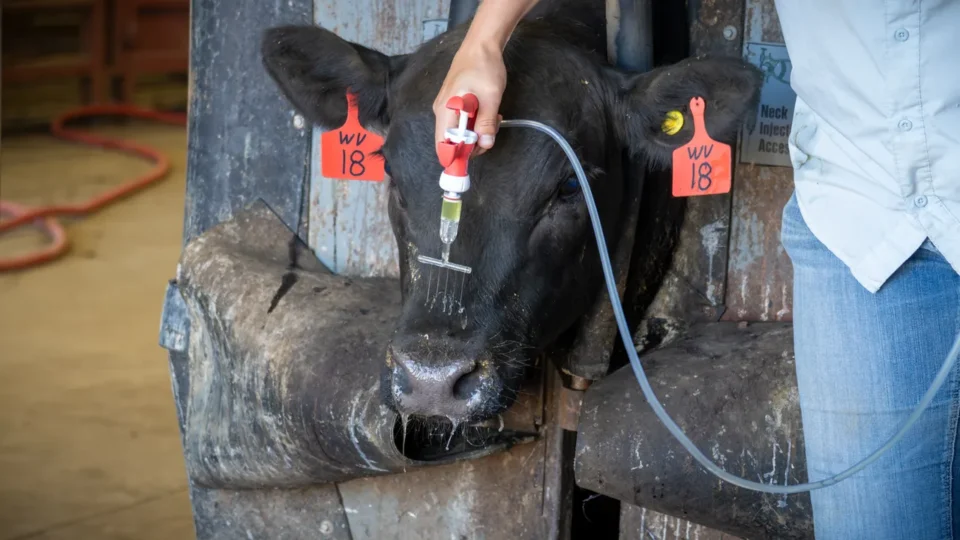
One example is CattleZen, which combines maternal bovine appeasing substance (MBAS) with 2M2B, a fast-acting calming pheromone. Applied above the muzzle during routine handling, the product integrates easily into existing management programmes while helping cattle remain calmer during stressful events.
Research has shown that MBAS can reduce stress-related behaviours, improve health and support better growth, while 2M2B helps lower heart rate, reduce aggression and promote calmer behaviour shortly after application.
Research Shows Positive Results
Recent studies have highlighted the potential benefits of dual-pheromone technology.
A 2025 Alberta weaning trial found that calves treated with the dual-pheromone solution vocalised significantly less during the first hours after weaning, indicating lower stress levels throughout the transition period.
Another 2026 Alberta study involving more than 580 beef-on-dairy calves reported lower illness rates, reduced mortality and improved average daily weight gain compared with untreated animals and those receiving a single-pheromone treatment. These findings suggest the technology may improve both animal welfare and production performance.
Supporting Better Beef Production
Although pheromone technology is not a replacement for good nutrition, health management or low-stress handling practices, it provides producers with an additional tool to improve cattle welfare during unavoidable stress events.
By complementing existing management systems, dual-pheromone technology has the potential to enhance animal health, improve growth performance and reduce stress-related production losses, contributing to more efficient and profitable beef operations.
