
Namibia and Botswana have agreed to dismantle long-standing barriers restricting the cross-border trade of livestock and animal products, signalling a major push to safeguard regional food security and revitalize their agricultural sectors amid ongoing animal disease pressures.
The bilateral talks aim to address foot-and-mouth disease (FMD) outbreaks and streamline cross-border agricultural commerce through a newly established Joint Veterinary Technical Committee. The framework focuses on aligning veterinary standards with international guidelines, easing regulatory delays, and promoting Commodity-Based Trade to support livestock, poultry, pork, and dairy sectors.
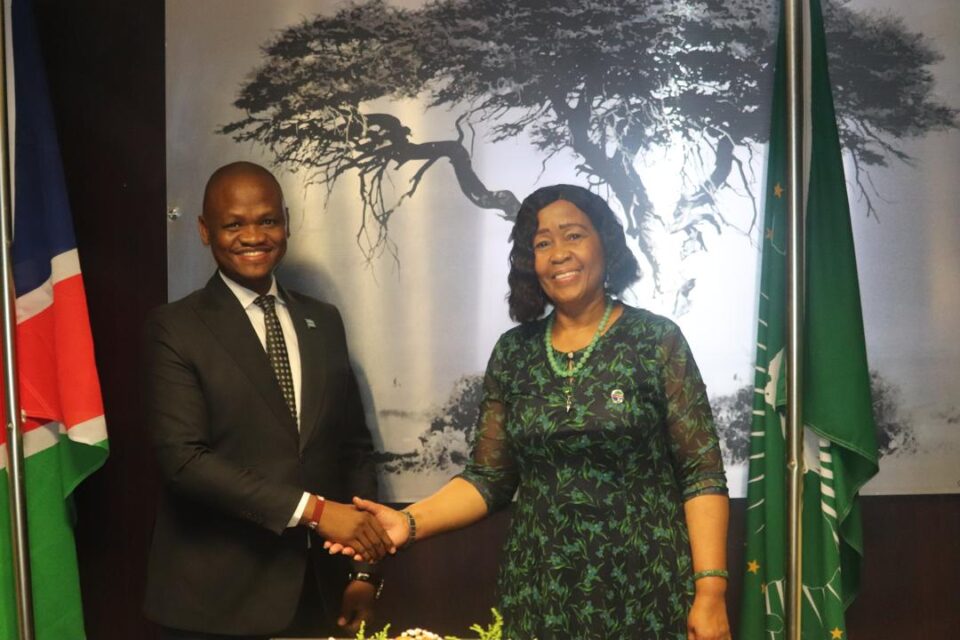
The agreement followed bilateral talks in Windhoek on 23 November 2026 between Namibia’s Minister of Agriculture, Fisheries, Water and Land Reform, Inge Zaamwani, and Botswana’s Minister of Lands and Agriculture, Edwin Dikoloti.
The meeting was held at Botswana’s request and follows directives from the two Heads of State under the Botswana-Namibia Bi-National Commission for sectoral committees to meet regularly and ensure bilateral agreements are implemented.
At the centre of the agreement is the establishment of a Joint Veterinary Technical Committee to address existing livestock trade restrictions, harmonise veterinary standards and facilitate the cross-border movement of animals and animal products.
The ministers directed their technical teams to operationalise the committee within two weeks of signing the joint communiqué.
According to the joint statement, the committee will focus on aligning veterinary standards with World Organisation for Animal Health (WOAH) guidelines, coordinating animal disease control measures and strengthening regulatory cooperation.
It will also strengthen real-time sharing of animal disease information, improve technical capacity within the two countries’ veterinary departments and coordinate vaccine supply to protect livestock against transboundary diseases, including foot-and-mouth disease (FMD).
During the meeting, the ministers discussed challenges associated with FMD control and the impact of animal disease restrictions on livestock trade.
Both countries agreed to promote commodity-based trade, which allows certain animal products to be traded under specified safety conditions despite disease-related restrictions.
The approach is intended to create additional export opportunities for livestock producers while maintaining animal health and food safety requirements.
The ministers identified commodity-based trade as an important approach to maintaining trade opportunities while managing animal disease risks.
The talks went beyond cattle and beef. The two ministers also addressed difficulties affecting the cross-border importation of poultry and pork products, committing to resolve existing bottlenecks to support the growth and financial sustainability of their domestic poultry and pig industries.
They further agreed to explore closer private-sector cooperation in developing a joint poultry value chain.
In the dairy sector, the countries committed to working together to increase milk production and reduce reliance on external dairy markets. This will include harmonising animal health protocols and logistical procedures to facilitate the movement of dairy animals and high-quality genetic material between the two countries.
The ministers also agreed to harmonise animal health protocols and logistical procedures to facilitate the movement of livestock and high-quality dairy genetics between Namibia and Botswana.
“Recognizing the massive export potential of Namibia and Botswana agricultural products, the Ministers committed to supporting comprehensive trade facilitation measures,” the joint statement said.
The two countries also agreed to coordinate strategies for entering high-value export markets and expanding agricultural trade opportunities across the African continent.
This includes developing joint market-entry strategies and strengthening cooperation to improve the competitiveness of livestock and agricultural products in regional and international markets.
Namibia and Botswana said the cooperation would strengthen animal disease management, expand commercial opportunities for agricultural producers and contribute to regional food security.
The agreement is aimed at boosting food security and creating new opportunities for farmers and agribusinesses in both countries.
For producers who have faced months of disrupted sales and livestock movement restrictions linked to FMD, the shift toward harmonised standards, faster disease-information sharing and commodity-based trade could mean more predictable market access, without waiting for full disease-freedom status to resume trade.
The test now will be implementation: whether the Joint Veterinary Technical Committee is operational within the promised two weeks, and how quickly its recommendations translate into permits, protocols and actual cross-border movement.
