


The progress has been driven by government support, the modernization of existing poultry farms and the launch of new production facilities. The next stage of the industry’s development will focus on major investment projects aimed at increasing output, reducing reliance on imported products and strengthening Kazakhstan’s position in international markets.
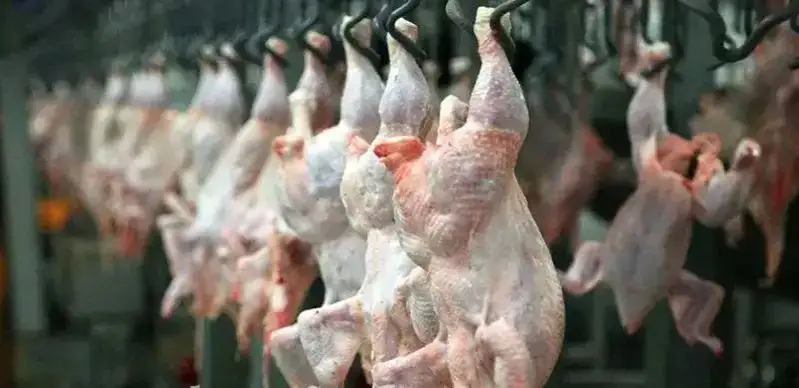
Currently, 70 poultry farms operate across the country. Of these, 37 specialize in egg production, with a combined annual capacity of 4.5 billion eggs, while the remaining 33 produce poultry meat. Their total production capacity reaches 510,000 tons annually. Kazakhstan has already achieved full self-sufficiency in eggs, meeting domestic demand entirely through local production.
To further expand the sector, the government is developing a new portfolio of investment projects expected to add more than 200,000 tons of annual poultry meat production capacity. In particular, projects by Aitas JSC and Alel Agro JSC are expected to account for approximately 170,000 tons of the additional capacity. Their implementation is expected to significantly increase the share of domestically produced poultry meat in the local market.
At the same time, Kazakhstani producers are expanding their presence in international markets. The country exported 32,000 tons of poultry meat in 2025, while exports reached 14,200 tons during the first nine months of 2026.
Export destinations include the Eurasian Economic Union (EAEU) countries, Azerbaijan, Mongolia and Qatar. China is also emerging as an important potential market. Kazakhstan has signed a protocol allowing poultry meat exports to China and is currently working to have domestic producers included in the Chinese exporters’ registry.
Access to long-term, affordable financing remains a key factor in the industry’s expansion. Poultry producers can obtain investment loans at an annual interest rate of 2.5% for up to 10 years, alongside working capital financing programs offering loans at 5% annually.
Under the working capital financing program, 17 poultry farms have received a total of 27.2 billion tenge in funding.
In 2026, the government has allocated 28 billion tenge in subsidies to support the development of the poultry meat industry. Approximately 1 billion tenge has been directed toward reducing the cost of purchasing day-old chicks and breeding eggs.
Additional assistance comes from a reserve fund containing 201,000 tons of feed grain, which is supplied to producers at fixed prices. The measure is intended to ensure access to affordable feed materials and reduce production costs for poultry farms.
Another strategic priority is the development of Kazakhstan’s domestic breeding base. To encourage local production of breeding materials, the government has updated investment subsidy regulations for the construction of first- and second-tier breeding facilities. The initiative is expected to create better conditions for establishing a fully integrated poultry production cycle within the country.
Overall, Kazakhstan’s poultry industry is entering a new phase of development, shifting from expanding basic production capacity toward building a more competitive sector supported by domestic breeding facilities, reliable feed supplies and growing export opportunities.
The government’s main objective is to further increase the share of locally produced poultry meat in the domestic market and gradually achieve full self-sufficiency in poultry production.
Earlier, Qazinform reported beef and lamb exports rose as Kazakhstan expanded the livestock sector.
