
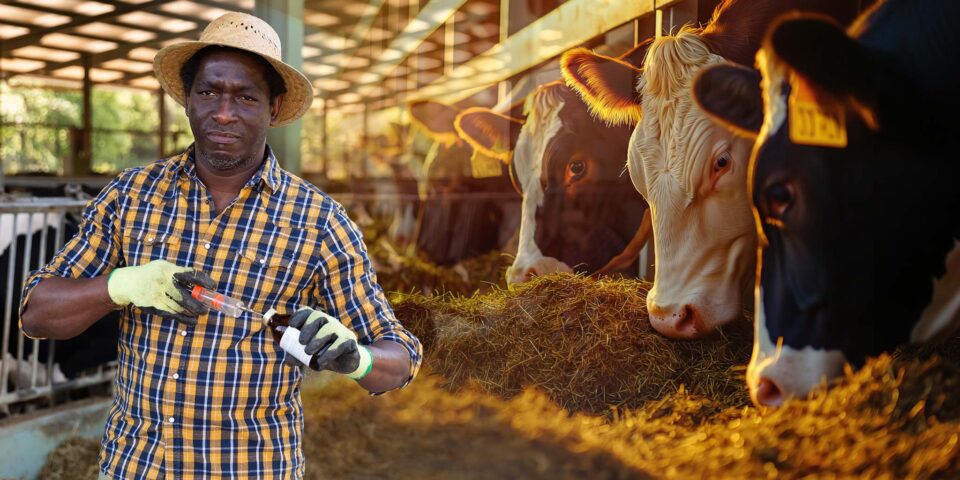
The Southern Africa Agri Initiative (Saai) has voiced strong objections to a recent joint declaration signed by John Steenhuisen and Alois Rainer during the German minister’s visit to South Africa. The declaration, aimed at strengthening bilateral cooperation in combating Foot-and-mouth disease (FMD), includes plans for livestock vaccination and research into emerging vaccine technologies, including mRNA-based vaccines.
Saai’s leadership warned that farmers and consumers are likely to resist the introduction of mRNA vaccines into South African livestock. According to Dr Theo de Jager, the long-term safety of mRNA technologies has not yet been sufficiently proven.
“Most South African cattle producers and consumers will strongly resist the introduction of mRNA vaccines into the herds across South Africa,” said De Jager.
The organisation noted that while mRNA vaccines were widely deployed during the COVID-19 pandemic, lingering questions remain regarding their broader medical and biological impacts. Saai highlighted global differences in adoption, observing that countries such as Russia and China largely avoided widespread mRNA vaccination.
Beyond scientific concerns, Saai cautioned that introducing mRNA vaccines into livestock could undermine consumer confidence in animal products. De Jager explained: “Millions of consumers who avoided mRNA vaccines during the pandemic may be deeply concerned about indirect exposure through the meat and milk they consume.”
Policy Implications for Farmers
Saai also raised concerns about government policy affecting livestock producers. The organisation previously challenged regulations on meat analogues issued by the Department of Agriculture in June 2025, which farmers fear could impact traditional livestock production.
The potential introduction of mRNA vaccines, combined with regulatory changes, is being interpreted by some producers as part of a broader policy direction that may add pressure to family-run operations. Saai noted that similar policy debates in Europe have triggered widespread farmer protests, particularly in the Netherlands, Belgium, and Germany.
Declaration Sections Under Scrutiny
Saai’s objections focus specifically on sections of the ministerial statement referring to collaboration on new vaccine technologies, including:
- Advanced immunisation: Exploring new frontiers in FMD immunisation, including mRNA applications.
- Knowledge sharing: Exchanging best practices on outbreak prevention and FMD containment.
- Wildlife monitoring: Developing FMD monitoring systems for wildlife populations.
- Diagnostic research: Collaborative development of diagnostic tools.
The reference to mRNA technologies in livestock immunisation is of particular concern.
Call for Transparency
Saai has demanded full transparency regarding any research, agreements, or policy processes linked to the potential use of mRNA vaccines in livestock.
“Farmers and consumers alike have the right to know exactly what technologies are being introduced into the food production system,” said De Jager.
The organisation reaffirmed its commitment to protecting both agricultural producers and consumers from technologies with uncertain consequences for animal health, food safety, and human health.
