

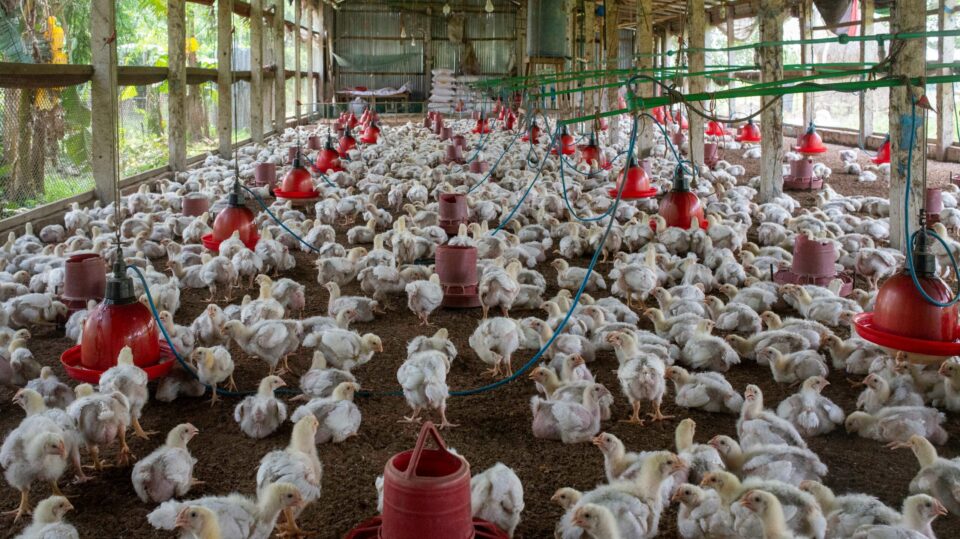
South Africa has achieved a significant milestone in global agriculture, with its poultry industry now ranked as the second most competitive in the world—surpassing the United States and trailing only Brazil. This is according to the 2025 Competitiveness Benchmark Report released by the Bureau for Food and Agricultural Policy in partnership with Wageningen University, which assessed leading poultry-producing nations across multiple performance indicators.
The report highlights remarkable efficiency gains that have propelled South Africa up the rankings. The country now leads in feed efficiency, achieving the lowest feed conversion ratio among all producers studied, meaning less feed is required per kilogram of chicken produced. Production cycles have also become faster, averaging just over 31 days, while feed efficiency has improved by more than 14% over the past decade. In addition, carcass weights have steadily increased, reflecting consistent improvements in productivity and management.
These achievements are particularly notable given the range of challenges the industry has faced in recent years. The 2023 energy crisis, marked by widespread loadshedding, drove up operational costs across feed mills and hatcheries. At the same time, an outbreak of Avian Influenza led to the loss of millions of breeder birds, disrupting supply and forcing temporary imports of fertile eggs. Producers have also had to contend with rising feed prices, currency pressures, higher interest rates, and drought conditions that reduced the availability of key inputs such as maize and soybeans. Competition from imports has further added to the strain on the local market.
Despite these pressures, the industry has demonstrated strong cost management. While feed prices rose significantly over the past decade, efficiency improvements helped limit the increase in feed-related production costs to a much smaller margin. Given that feed and day-old chicks make up the majority of production expenses, this has been a critical factor in maintaining competitiveness. As a result, South Africa’s production costs are now lower than those in the United States and more competitive than several European producers, although still higher than Brazil’s.
The sector has also recorded steady growth, with production expanding faster than consumption over the past ten years. This performance reflects ongoing investment in genetics, improved farming practices, and the adoption of modern technologies, along with relatively competitive labour and processing costs. Together, these factors have strengthened the industry’s position in the global market.
Overall, South Africa’s poultry sector stands out as a clear example of resilience and innovation. By continuing to improve efficiency and adapt to challenging conditions, the industry is well positioned to maintain its global competitiveness and contribute meaningfully to food security and economic growth.
