

Foot-and-mouth disease has escalated into a national agricultural and consumer crisis, placing immense pressure on South Africa’s livestock sector and broader food system. Following the 14 January media briefing by John Steenhuisen, TLU SA convened to assess the situation and evaluate the government’s response. While the Minister outlined a technically sound strategy, the reality on the ground suggests that South Africa is no longer effectively controlling the disease but rather attempting to manage a crisis that is rapidly worsening. The speed and scale of the outbreak are severely undermining farming incomes, food security, and access to international markets.
According to TLU SA, the central issue is not a lack of planning, but the State’s inability to implement its strategies effectively. Farmers are facing immediate losses—losing livestock, contracts, and livelihoods—while official responses remain largely focused on communication and long-term frameworks. The continued reliance on centralised control has proven inadequate, as the State lacks the operational capacity to enforce disease control measures at the scale required. As a result, the outbreak continues to spread while interventions lag behind.
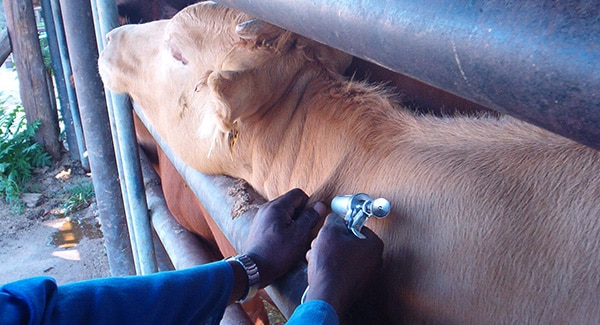
Concerns have also been raised about vaccine availability and production. There is still no clear account of how the R500 million allocated to restore vaccine production at Onderstepoort Biological Products has been utilised. At the same time, private-sector vaccine production—despite existing expertise and infrastructure—is being constrained by regulatory barriers. Even commercial farmers with strict biosecurity measures are currently not permitted to vaccinate their own animals under emergency regulations, while costly imported vaccines offering shorter protection periods remain in use.
TLU SA argues that the locally developed vaccine by the Agricultural Research Council should be urgently released and distributed at scale and at affordable prices. These institutions, they contend, are meant to support the agricultural sector, not hinder its survival through delays and administrative obstacles. The priority, they stress, must be saving the livestock industry and safeguarding national food security.
The organisation strongly believes that the solution lies not in further centralisation, but in a controlled decentralisation of disease management. It is calling on the government to declare a national state of disaster and implement emergency measures that would allow private companies to produce and procure vaccines, and enable farmers—under proper supervision—to vaccinate their own herds. In addition, state veterinary services should focus on the largely uncontrolled informal sector, where the risk of disease spread is often highest. Without strict movement control and widespread vaccination, the disease is unlikely to be contained.
This crisis extends far beyond the agricultural sector. It is increasingly affecting consumers, as rising livestock losses drive up meat prices and threaten affordability. Food security is becoming a growing concern, and the economic and social consequences are expected to ripple across the country. Farmers are already being pushed out of production, with long-term implications for rural economies and employment.
While acknowledging that both regulatory shortcomings and limited state capacity have contributed to the current situation, TLU SA is calling for urgent collaboration. It emphasises the importance of movement control and improved biosecurity but maintains that these efforts will only succeed if the State allows the private sector to contribute fully using its existing capacity and expertise.
The financial burden of managing the outbreak is another pressing issue. TLU SA argues that vaccine costs should be covered by the State to ensure widespread access and rapid uptake. With the private sector ready to assist, the organisation believes that what is missing is the political will to share control in the interest of protecting food security, economic stability, and the future of South Africa’s farming communities.
Time, it warns, is running out. Drawing comparisons to Brazil—which has successfully managed disease control across a vastly larger cattle population—TLU SA insists that South Africa has the capacity to do the same. However, this will only be possible if practical, results-driven solutions are prioritised over rigid, centralised control.
